Read the chart as text
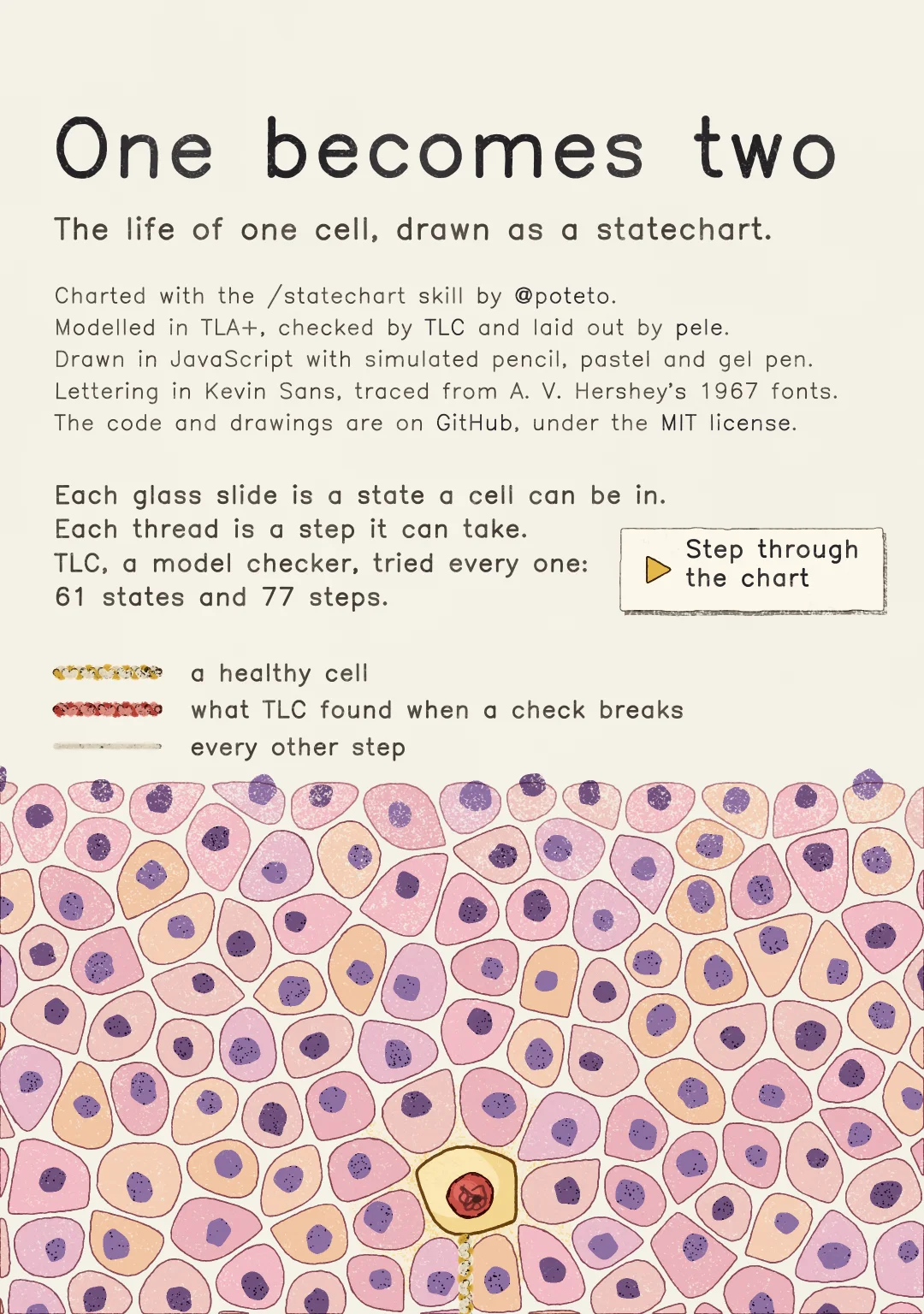
A statechart of the cell cycle, modelled in TLA+ and checked by TLC, which reached 61 states and 77 steps. Each state below lists the steps that leave it.
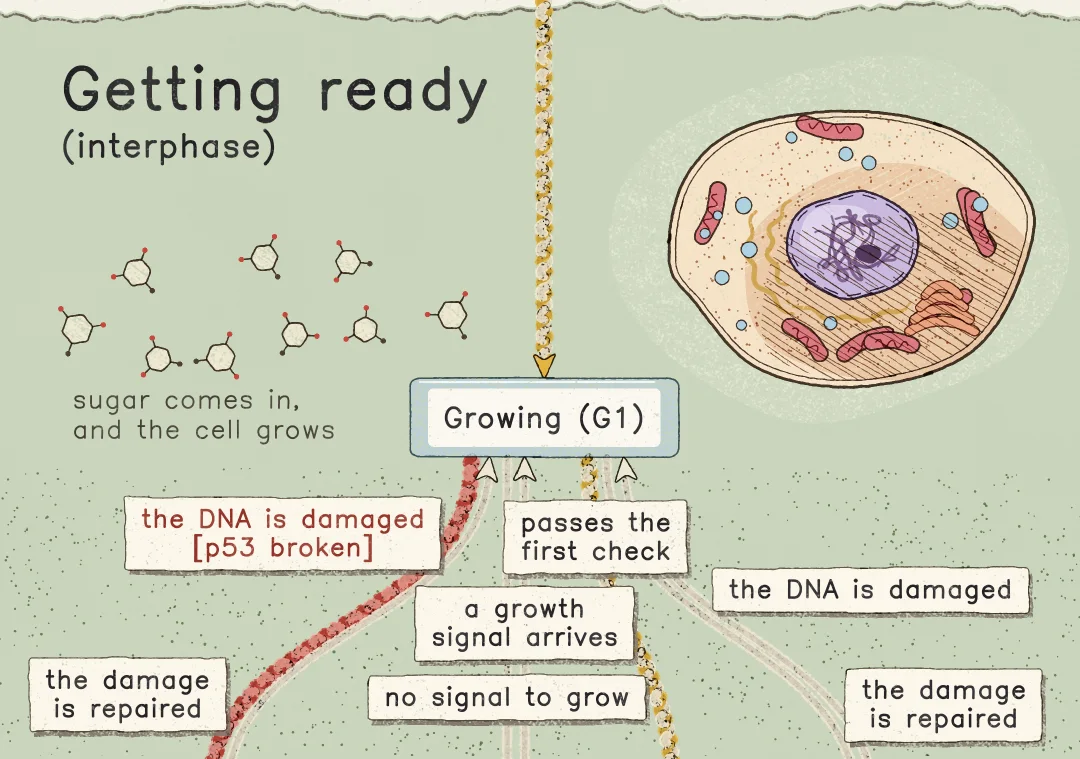
Getting ready (interphase)
- Growing (G1)
- the DNA is damaged [p53 broken] → Damaged, and p53 is broken
- no signal to grow → Resting (G0)
- passes the first check → Copying its DNA (S)
- the DNA is damaged → Damaged, held by p53
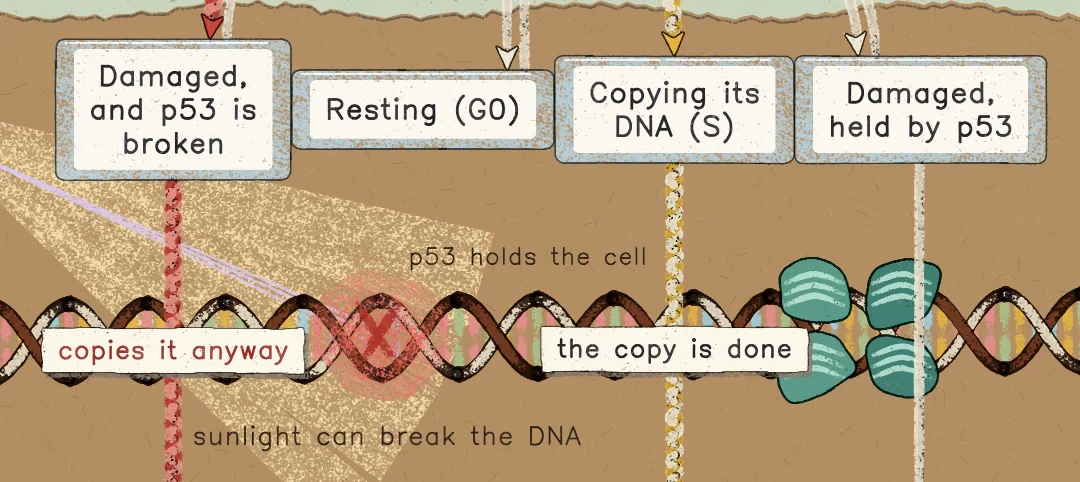
- Damaged, and p53 is broken
- the damage is repaired → Growing (G1)
- copies it anyway → Copying damaged DNA
- Resting (G0)
- a growth signal arrives → Growing (G1)
- Copying its DNA (S)
- the copy is done → Checking the copy (G2)
- Damaged, held by p53
- the damage is repaired → Growing (G1)
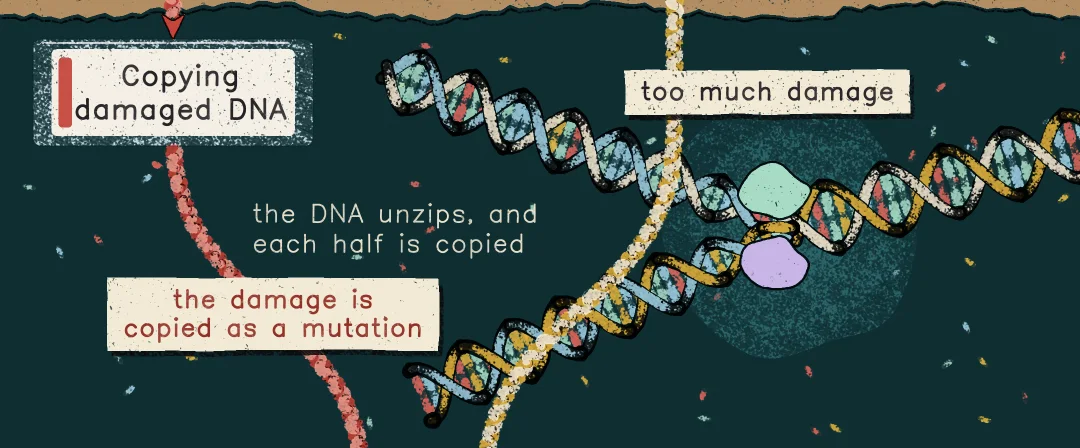
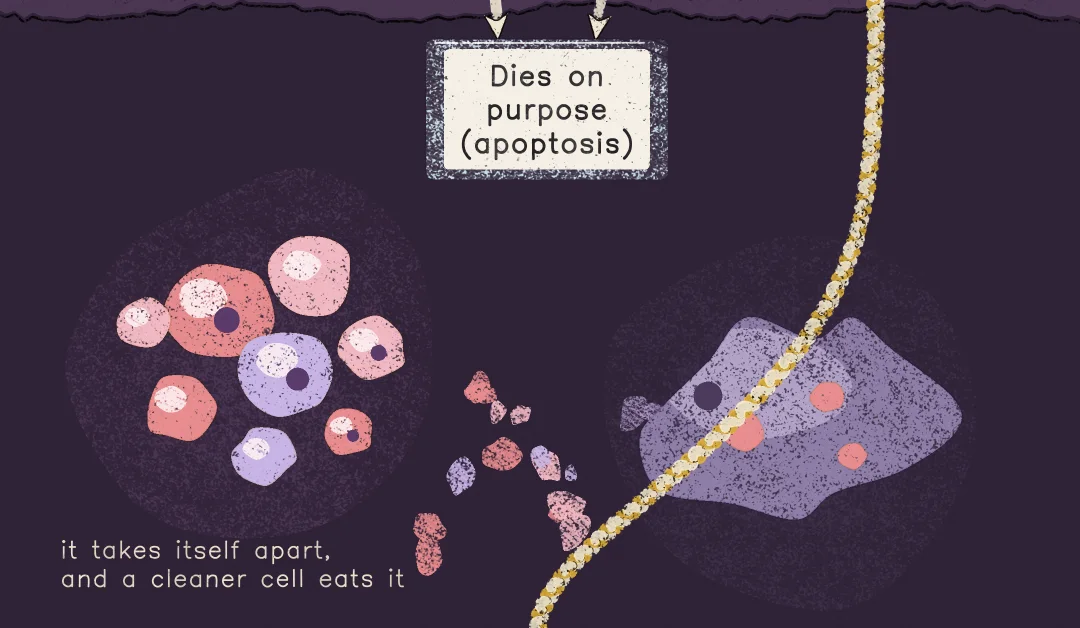
- too much damage → Dies on purpose (apoptosis)
- Copying damaged DNA (breaks a rule)
- the damage is copied as a mutation → Checking the copy (G2)
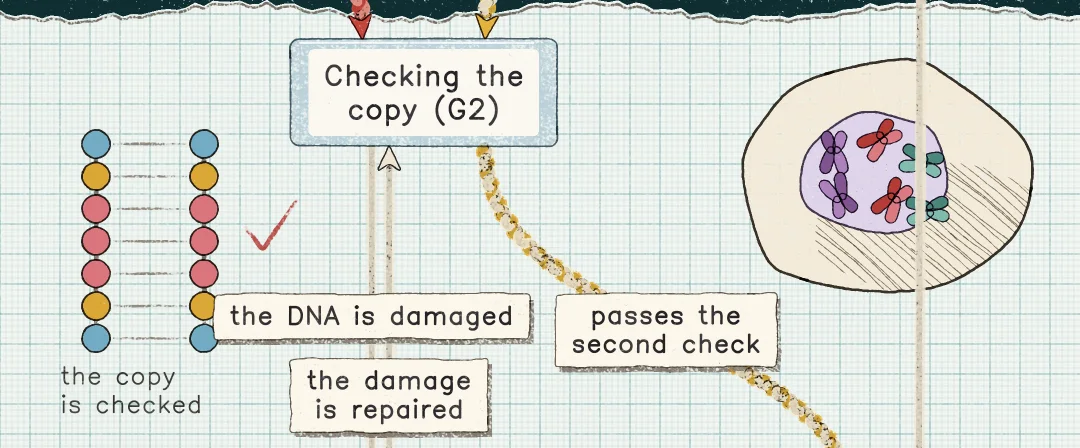
- Checking the copy (G2)
- the DNA is damaged → Damaged, held at the second check
- passes the second check → Coiling up (prophase)
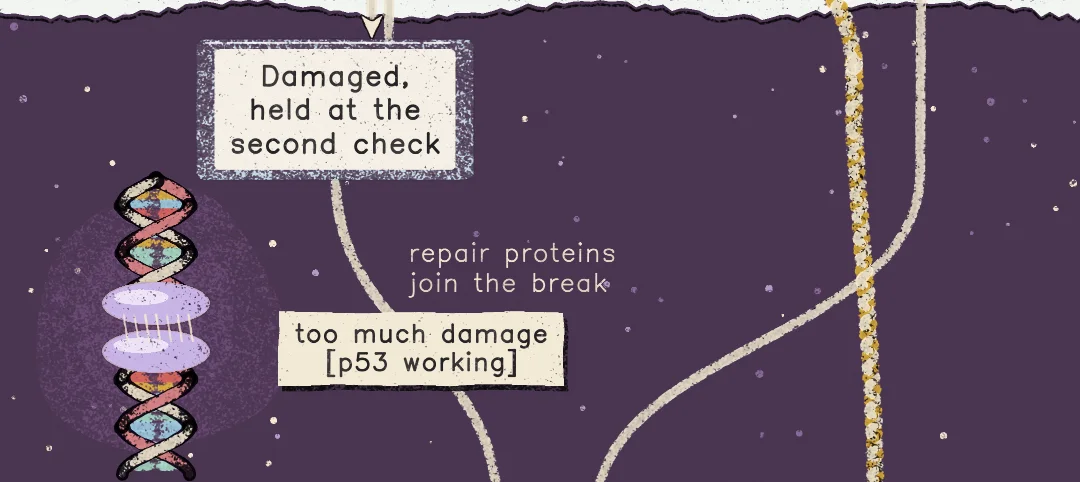
- Damaged, held at the second check
- the damage is repaired → Checking the copy (G2)
- too much damage [p53 working] → Dies on purpose (apoptosis)
Endings
- Dies on purpose (apoptosis)
- the end
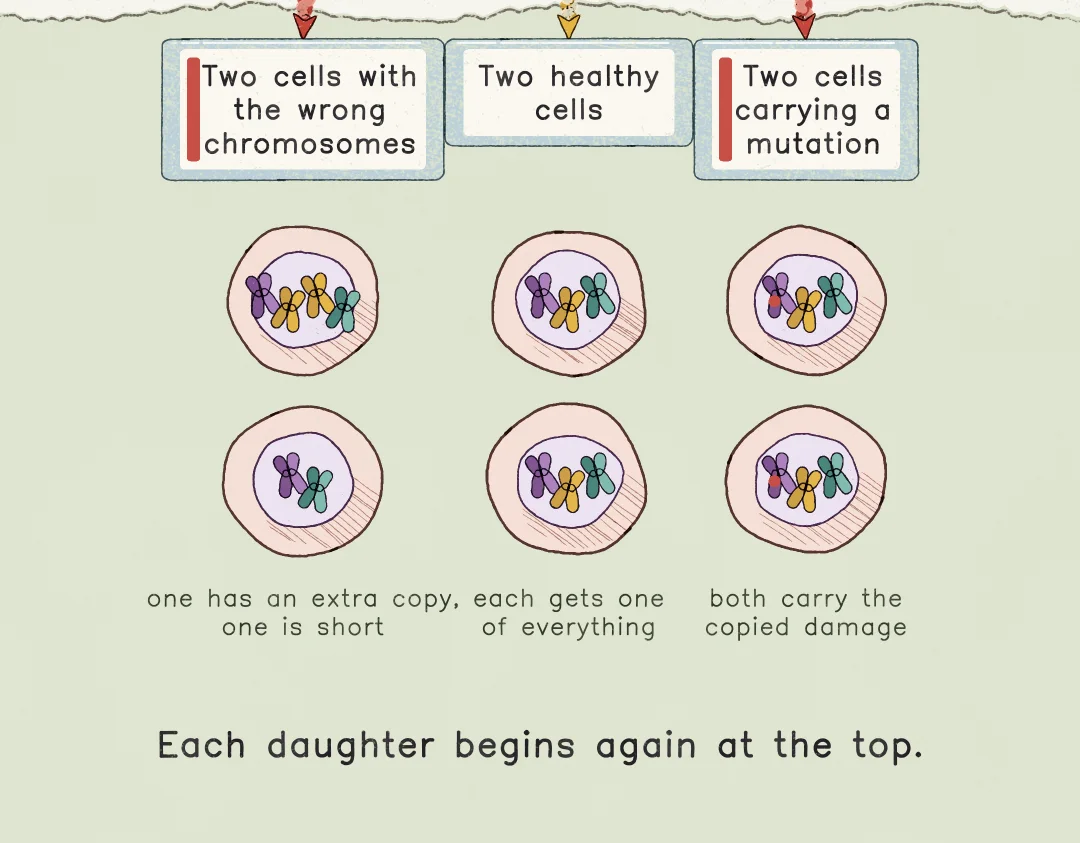
- Two cells with the wrong chromosomes (breaks a rule)
- the end
- Two healthy cells
- the end
- Two cells carrying a mutation (breaks a rule)
- the end
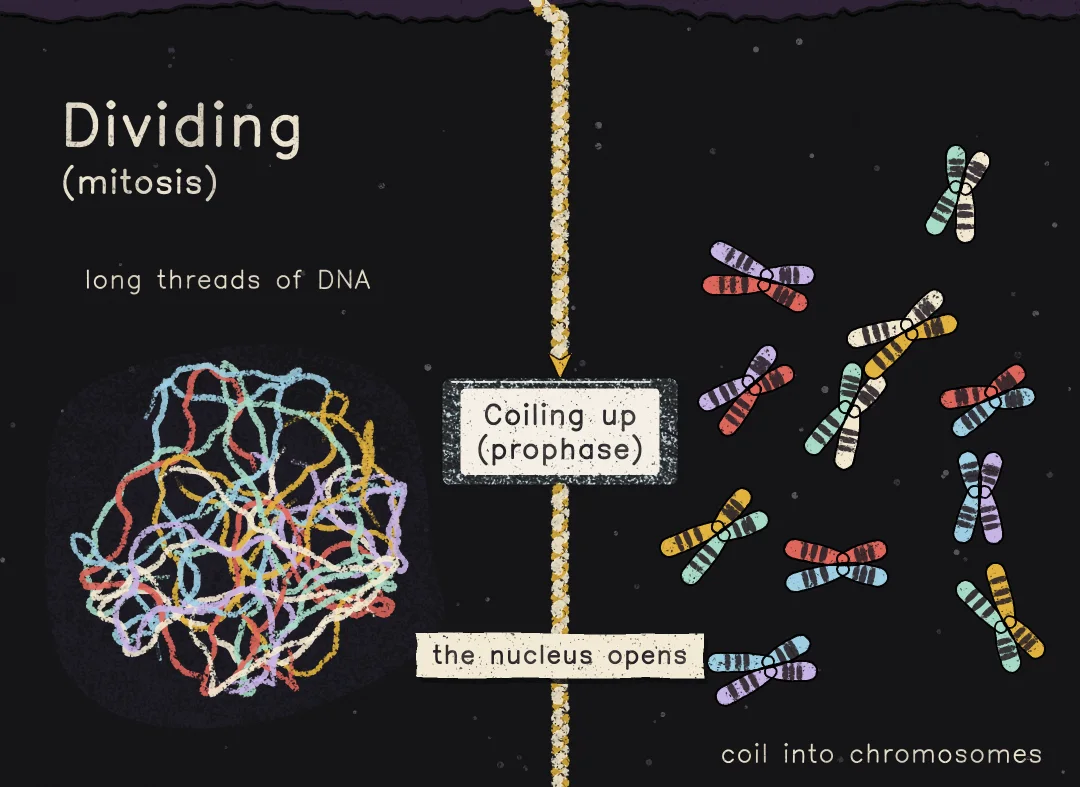
Dividing (mitosis)
- Coiling up (prophase)
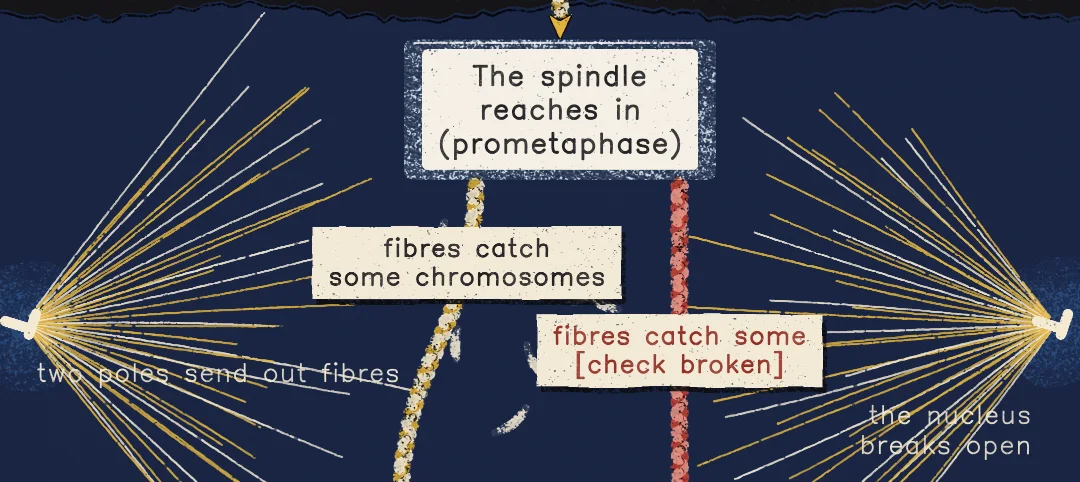
- the nucleus opens → The spindle reaches in (prometaphase)
- The spindle reaches in (prometaphase)
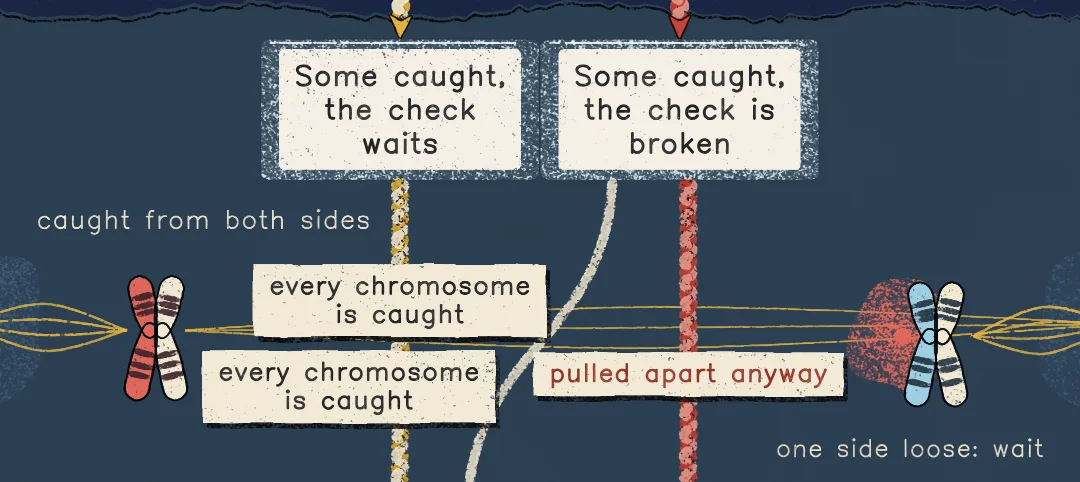
- fibres catch some chromosomes → Some caught, the check waits
- fibres catch some [check broken] → Some caught, the check is broken
- Some caught, the check waits
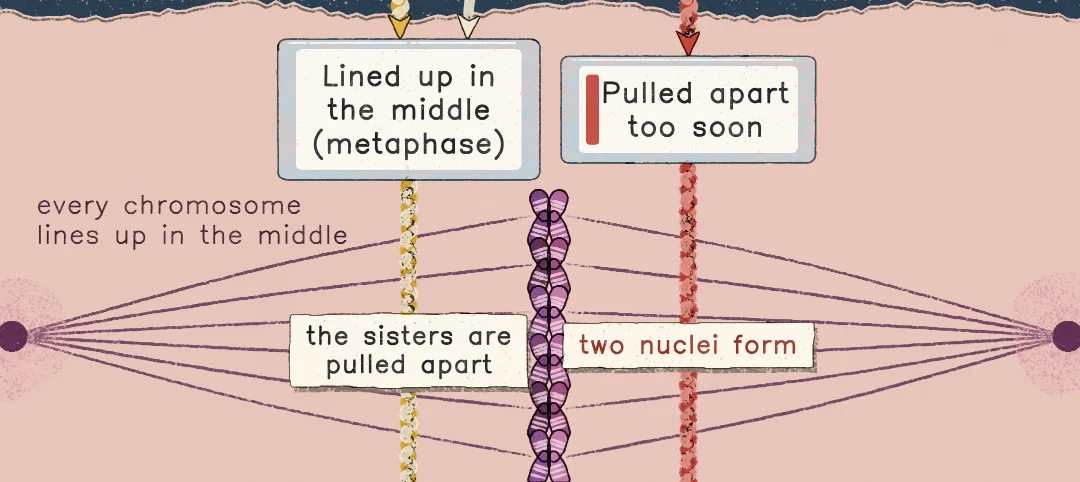
- every chromosome is caught → Lined up in the middle (metaphase)
- Some caught, the check is broken
- every chromosome is caught → Lined up in the middle (metaphase)
- pulled apart anyway → Pulled apart too soon
- Lined up in the middle (metaphase)
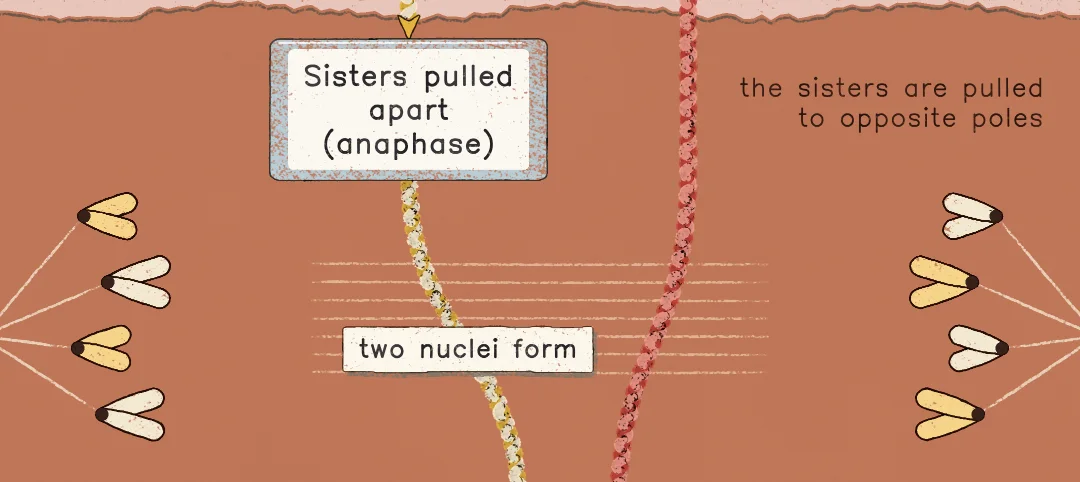
- the sisters are pulled apart → Sisters pulled apart (anaphase)
- Pulled apart too soon (breaks a rule)
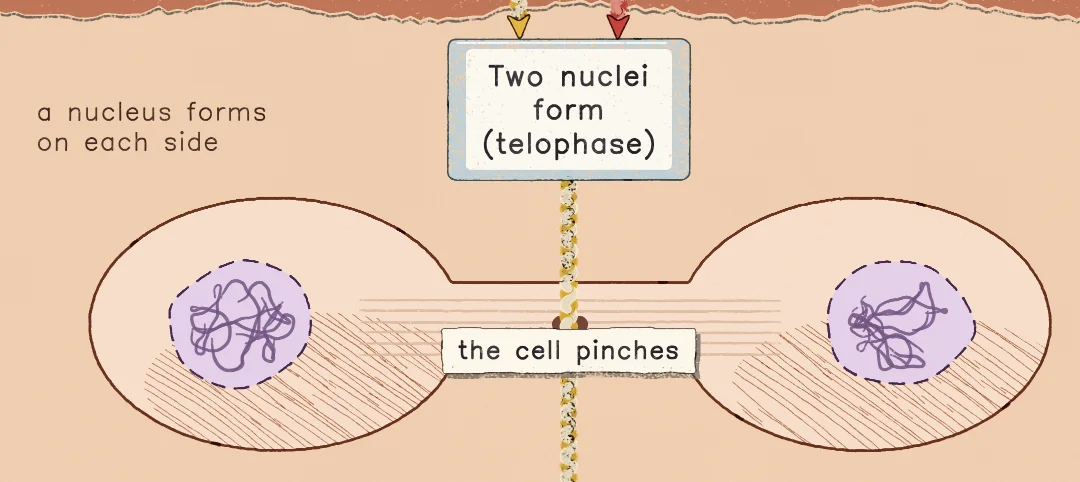
- two nuclei form → Two nuclei form (telophase)
- Sisters pulled apart (anaphase)
- two nuclei form → Two nuclei form (telophase)
- Two nuclei form (telophase)
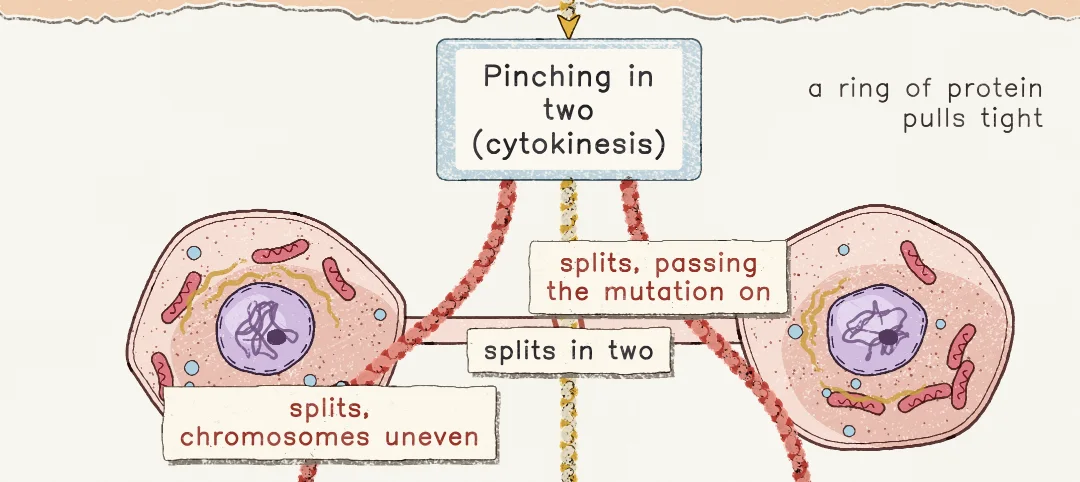
- the cell pinches → Pinching in two (cytokinesis)
- Pinching in two (cytokinesis)
- splits, chromosomes uneven → Two cells with the wrong chromosomes
- splits in two → Two healthy cells
- splits, passing the mutation on → Two cells carrying a mutation
What TLC found
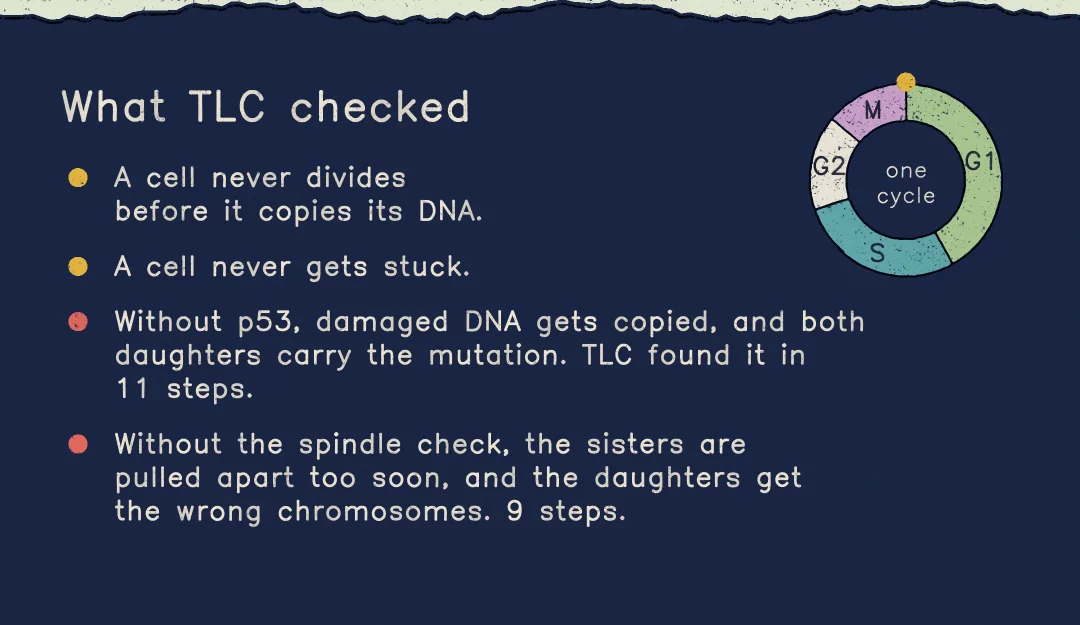
- Holds: a cell never divides before it copies its DNA, and a cell never gets stuck.
- Breaks without p53: damaged DNA gets copied, and both daughters carry the mutation (a path of 11 steps).
- Breaks without the spindle check: the sisters are pulled apart too soon, and the daughters get the wrong chromosomes (a path of 9 steps).